A hundred technical rabbit holes.
Which model? Which framework?
And how does any of it fit together?
The pace keeps accelerating.
Keeping up can become a job of its own.
Struggling to fix it yourself?
Solving the problem means working through models, code, and unfamiliar tools. And just as you start to understand them, the next wave arrives.
What do you do? Where do you start? ↓
Data, AI & Automation.
Built for Business.
I help businesses streamline daily operations, eliminate manual friction, and build practical software, automation, and data systems designed for clear financial return.
01 / THE FOUNDATION
AI is one layer.
The system makes it useful.
Reliable data. Connected tools. A clear understanding of the work. AI and automation build on these foundations to solve operational problems.
Core Fields of Work
Click on any core field below to explore the specific technical domains I work across.
Different symptoms. Connected disciplines.
Start with the operational problem. Follow the path to the work that can improve it.
Raw files, missing values, duplicate records, and disconnected systems leave teams cleaning and reconciling data before they can use it.
Data Engineering
ETL pipelines / Data integration / Monitoring & SQL optimization
Clean, connected, usable data. Reliable pipelines. Less manual preparation.
Reports show what happened, but not why. Bottlenecks go unnoticed, questions stay unanswered, and teams struggle to see what needs attention or which decision to make.
Analytics & Process Intelligence
Process mining / Dashboards & reporting / Research & analysis
Clearer insights. Visible bottlenecks and root causes. Measurable performance. Better-informed decisions.
Repetitive tasks, routine questions, and manual document checks keep pulling people away from important work. Knowledge is hard to find, and work stops whenever the right person is unavailable.
AI & Automation
Custom applications / Privacy & sovereignty / Enablement & optimization
Less repetitive work. Faster answers. Automated document and image processing. Support that stays available, with people in control.
The fields work together. An engagement may use one, two, or all three.
The expertise behind the solutions
Explore the technical work within each field. Open a section below for more detail.
Field 01
Data Engineering
Building reliable data foundations so information can move, connect, and perform seamlessly across your entire business.
+
Data Engineering
Building reliable data foundations so information can move, connect, and perform seamlessly across your entire business.
ETL Pipelines
Extract, Transform, Load workflows. For example, building robust backend data flows to clean and move data seamlessly.
Data Integration
Unifying fragmented data sources. For example, connecting isolated databases, files, and API outputs into a coherent structure.
Monitoring & SQL Optimization
Database performance tuning. For example, monitoring ETL jobs and execution to identify slow queries or unindexed tables.
Field 02
Analytics & Process Intelligence
Turning operational data and event logs into clear visibility, accurate diagnosis, and better business decisions.
+
Analytics & Process Intelligence
Turning operational data and event logs into clear visibility, accurate diagnosis, and better business decisions.
Dashboards & Reporting
Clear visibility into business performance. For example, custom performance monitoring and KPI tracking views.
Process Mining
Data-driven workflow diagnostic audits. For example, event log bottleneck analysis to locate operational friction points.
Research & Analysis
Data-backed insights for decision making. For example, custom data analysis, visual reporting, and structured research.
Field 03
Artificial Intelligence & Automation
Practical AI systems integrated into real workflows, ranging from intelligent automation to private environments.
+
Artificial Intelligence & Automation
Practical AI systems integrated into real workflows, ranging from intelligent automation to private environments.
Custom AI Applications & Automations
Production-grade systems built into core workflows. For example, intelligent voice agents handling and booking restaurant reservations automatically.
AI Privacy & Sovereignty
Controlled data handling through private infrastructure. For example, local LLM setups running on private hardware or private RAG document search with defined access controls.
AI Enablement & Optimization
Maximizing efficiency, utility, and cost-effectiveness. For example, API and token cost optimization through model routing or internal workflow audits.
What Can This Actually Do For Your Business?
Technology is only useful when it changes something that matters. Click any example below to see how systems can be built around real operational problems.
01
Automate Customer Interactions
+
Automate Customer Interactions
An AI voice or chat system can handle routine questions, understand requests, check information, and complete actions such as bookings or appointment requests.
Less manual handling, faster responses, greater availability
02
Automate Repetitive Back-Office Work
+
Automate Repetitive Back-Office Work
Automatically process incoming documents, emails, forms, or structured data, then classify information and trigger the next steps in a workflow.
Less administrative work, fewer errors, faster processing
03
Computer Vision: Worker Safety Monitoring
+
Computer Vision: Worker Safety Monitoring
Identify from a live camera feed if workers are wearing required safety clothes and equipment such as hardhats, vests, or safety glasses and flag compliance issues in real time.
Proactive safety enforcement, continuous monitoring, reduced incident risks
05
Computer Vision: Inventory & Shelf Tracking
+
Computer Vision: Inventory & Shelf Tracking
Analyze retail shelves or warehouse storage racks via camera feeds to track stock levels, identify misplaced items, and alert teams when inventory runs low.
Real-time stock visibility, reduced out-of-stock instances, automated audits
06
Make Fragmented Data Usable
+
Make Fragmented Data Usable
Connect databases, spreadsheets, APIs, and operational systems so information can move reliably instead of being reconciled manually.
Less manual reconciliation, more reliable data, one clearer picture
07
Find Where Operations Slow Down
+
Find Where Operations Slow Down
Process intelligence can analyze event data to reveal bottlenecks, delays, rework, and process steps that create unnecessary friction.
Identify operational friction, prioritize improvements, measure change
08
Give Leadership Better Visibility
+
Give Leadership Better Visibility
Turn operational data into dashboards and reporting that answer the questions leadership actually needs to make decisions.
Faster decisions, clearer KPIs, less spreadsheet-driven reporting
09
Deploy Private AI
+
Deploy Private AI
Build controlled AI environments and private document-search systems for organizations where sensitive information and data-control requirements matter.
Greater data control, lower adoption barriers, privacy-conscious experimentation
10
Make AI More Cost-Efficient
+
Make AI More Cost-Efficient
Review model usage, routing, prompts, and architecture to reduce unnecessary inference and improve the economics of AI workflows.
Lower operating costs, better efficiency, more scalable AI adoption
11
Build an Internal AI Knowledge System
+
Build an Internal AI Knowledge System
Give employees a natural-language interface to internal documents, procedures, and organizational knowledge using retrieval-based AI systems.
Less time searching, faster information access, easier knowledge sharing
12
Automated Invoice & Receipt Matching
+
Automated Invoice & Receipt Matching
Ingest unstructured vendor invoices, extract line items via OCR/LLM parsing, match them against enterprise purchase orders, and flag reconciliation discrepancies automatically.
Reduced accounting overhead, faster vendor payout cycles, anomaly detection
13
Your Custom Solution
+
Your Custom Solution
Got a unique operational challenge that doesn't fit standard boxes? Let's design a custom pipeline, automation tool, or AI mechanism engineered specifically around your business rules.
Choose Your Engagement Style
You have a clear project in mind
If you already know what you want built or have a specific technical requirement, we jump straight into scoping, building, and deploying your system efficiently.
You want help finding where to start
If you are dealing with operational friction, messy workflows, or wasted hours, you think tech and AI can help, but you do not know where to start. We look at your processes together to figure out where technology can help the most.
A Direct Technical Partnership
Why businesses choose a specialized partner over traditional agencies or hourly freelancers.
Direct Technical Execution
IKU Consulting is intentionally focused. You work directly with the person understanding, designing, and building the solution, skipping layers of account management.
Clear Project Scope
Projects are structured around clear deliverables, milestones, and fixed scope rather than hourly billing or an indefinite stream of consulting hours.
Tawfeek Alkanbar, Founder & Technical Consultant
Academic Background & Professional Experience
IKU Consulting was founded by a data engineer and analyst equipped with a unique blend of technical mastery and strategic vision:
-
→
MSc in Information Studies (Data Science track) from the University of Amsterdam.
-
→
CEMS Master in Management from top-tier business schools.
This powerful combination allows me to bridge the gap between complex technology and strategic enterprise goals, ensuring every technical solution delivers clear business value.
Before starting IKU Consulting, I worked across data engineering and data analysis, working with data, systems, and the operational questions behind them.
I started IKU Consulting with a simple idea: businesses don't need more technology hype. They need someone who can understand the problem, work through the data and engineering challenges, and build something that actually works.
The Origin of IKU
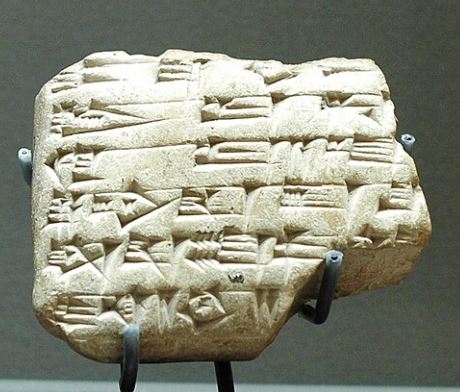
IKU takes its name from Iku-Shamagan, a king of the ancient kingdom of Mari, centred on the city of the same name in what is now eastern Syria, around 2500 BC. My own roots are in the same province, so the name is a personal connection to home.
Mari left behind tens of thousands of clay tablets recording shipments, correspondence, and everyday trade. Long before databases, people were keeping the records they needed to organise work and administer the kingdom.
That is the connection behind IKU: different tools, but a familiar purpose. Make information useful, help work run smoothly, and give people a clearer picture of what is happening.

Tell me what you're trying to improve.
I want a system that...
We can explore whether AI, automation, analytics, or data engineering can create a meaningful improvement for your business.
Start a Conversation